
Dog Dandruff: Causes, Skin Problems, and When Online Vet Advice Helps
By RexVet Team | Reviewed by Dr. Tiffany Delacruz, DVM
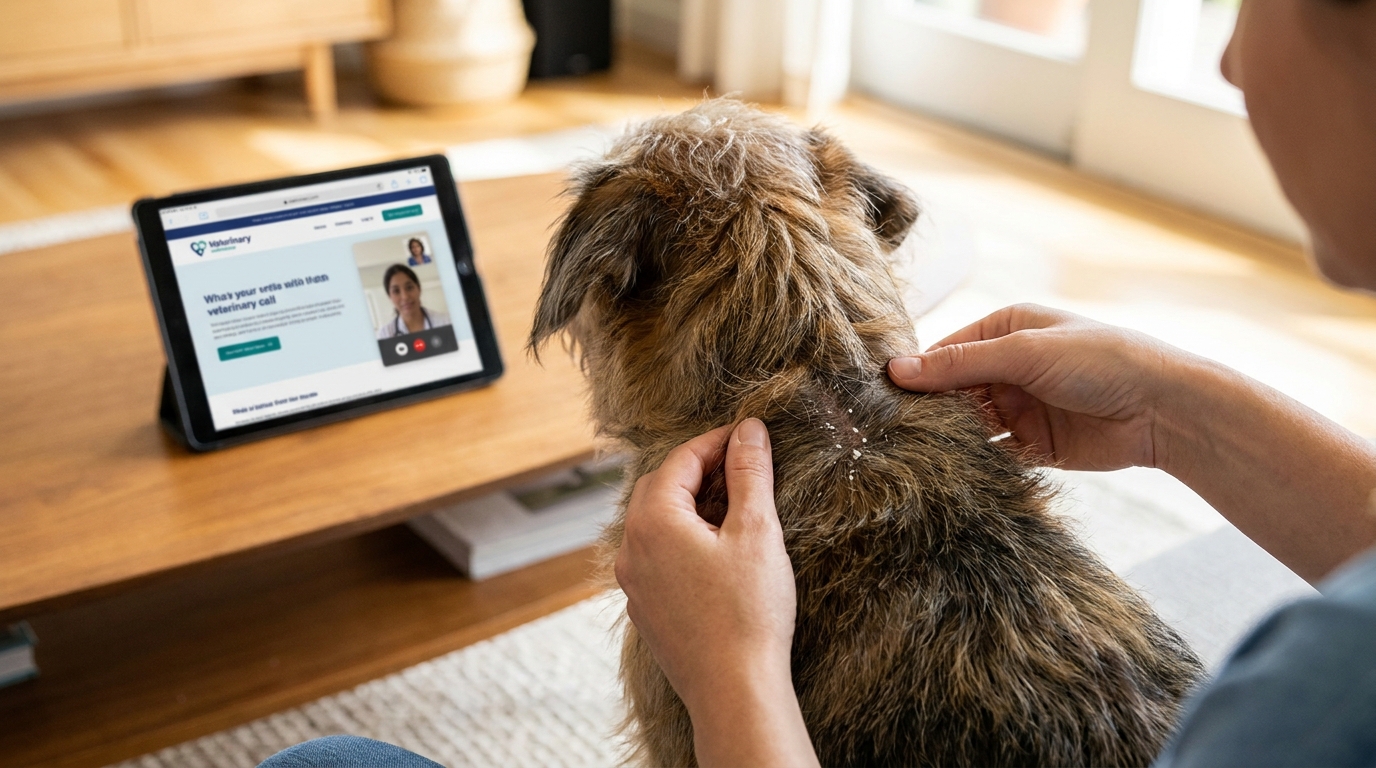
Dog dandruff is a common concern for pet owners who notice white flakes on their dog’s coat, persistent itching, or a dull, dry appearance. When you look for Dog Dandruff: Causes, Skin Problems, you’ll find that many cases improve with simple changes once the root cause is identified. These signs often point to underlying skin issues that range from simple dryness to more complex conditions like allergies or yeast overgrowth. Recognizing the early symptoms helps you take timely action before irritation worsens or leads to secondary infections.
Common triggers include environmental allergens , food sensitivities, flea bites, and fungal infections such as Malassezia yeast, which can cause greasy flakes and a musty odor. Over-bathing with harsh shampoos or using human products strips natural oils, while insufficient grooming lets dead skin accumulate. For a reliable assessment, show the affected area to a licensed veterinarian on a RexVet live video visit. The vet can recommend appropriate shampoos or diet adjustments, prescribe treatment when it is clinically appropriate and state law allows, or tell you if an in-person visit is needed.
Why Dogs Get Dandruff
Understanding why dogs get dandruff starts with looking at the skin’s moisture balance and what touches it daily, a topic covered in the guide Dog Dandruff: Causes, Skin Problems.
Dry skin is a trigger; low humidity, winter heating, or a diet low in essential fatty acids can strip the coat’s natural oils, causing flakes.
Nutrition plays a role too—foods low in omega‑3 and omega‑6 fats or those that cause mild food sensitivities may result in a dull, scaly coat.
Bathing habits matter; over‑washing with harsh shampoos or using people‑products strips protective lipids, while infrequent rinsing leaves irritating residue.
When flakes persist, adjust the diet, use a vet‑recommended moisturizing shampoo, and limit baths to once every three to four weeks unless a vet says otherwise.
As outlined in Dog Dandruff: Causes, Skin Problems, for a reliable assessment, showing the affected area to a licensed veterinarian on a live video visit through RexVet can help pinpoint whether the flakes stem from dryness, diet, or bathing habits without an in‑person visit.
Remember to avoid human shampoos, essential oils, or medicated creams unless a vet specifically recommends them, as these can worsen irritation.
Dandruff With Itching or Redness
If you see dog dandruff with itching or redness, the skin is likely irritated or developing an infection.
Look for scratching, biting, or licking at flaky patches, which can break the skin barrier and invite bacteria or yeast.
Redness may appear as a pinkish rash around the flakes, and in advanced cases you might notice a greasy feel, a musty odor, or small bumps that could become pustules.
These signs suggest that dryness is no longer the only issue; allergies, flea bite hypersensitivity, or an overgrowth of Malassezia yeast are common culprits.
To avoid worsening the problem, never apply human shampoos, essential oils, or medicated creams without veterinary guidance, as they can strip protective oils or cause further irritation.
Instead, show the affected areas to a licensed veterinarian on a video visit through a service like RexVet.
The vet can recommend appropriate shampoos, diet changes, or prescription treatments and let you know if an in‑person visit is needed.
Remember that Dog Dandruff: Causes, Skin Problems emphasizes that telehealth advice can prevent complications.
Taking action helps prevent secondary infections and keeps your dog comfortable.
Allergies, Yeast, and Parasites
Allergies cause flakes by triggering histamine release that weakens the skin barrier and speeds up dead‑cell shedding. Common triggers are pollen, dust mites, mold, or certain food proteins, leaving the coat dull and itchy. This mechanism is highlighted in resources such as Dog Dandruff: Causes, Skin Problems.
When the skin’s oil balance shifts, Malassezia yeast can overgrow in moist areas like the ears or groin, producing greasy, yellowish flakes and a musty smell. This overgrowth often follows allergic irritation or hormonal changes that increase sebum.
Parasitic mites such as Demodex or Sarcoptes burrow into the epidermis, causing inflammation and rapid skin‑cell turnover that appears as flakes, often with redness or crusting. A secondary yeast or bacterial infection can worsen the scaling. Showing the skin to a vet on a RexVet video visit helps distinguish these causes, as explained in Dog Dandruff: Causes, Skin Problems.
What Not to Put on Your Dog’s Skin
Many dog owners reach for their own shampoo or lotion when they see flakes, but human skin care products are formulated for a pH of about 5.5, while a dog’s skin runs closer to 7.0. Using a product that is too acidic can strip the natural oils that protect the coat, leading to more dryness and irritation.
Avoid sulfates (like sodium lauryl sulfate), parabens, and artificial fragrances—they can irritate or disrupt the skin’s microbiome. Essential oils such as tea tree, wintergreen, or pennyroyal are toxic to dogs, and even coconut or olive oil can trap moisture and encourage yeast overgrowth. Over‑the‑counter hydrocortisone creams meant for people may thin the skin and delay healing without veterinary guidance.
Instead of guessing, a video visit through RexVet for $64.99 lets a vet assess the flakes, recommend a dog‑safe shampoo, diet tweak, or prescription, and advise if an in‑person visit is needed. This step follows the guidance outlined in Dog Dandruff: Causes, Skin Problems. Book a video visit with a licensed vet online today for clear, safe guidance.
When Online Vet Advice Can Help
When flakes appear on your dog’s coat, a virtual visit lets a veterinarian examine the pattern and color of the skin in real time. By viewing close‑up photos and learning about the dog’s surroundings and any recent health shifts, the vet can tell whether the flakes look like simple dryness, an allergic rash, a greasy yeast overgrowth, or the tiny bites of parasites. This visual triage happens over live video, so you don’t have to wait for an office appointment to start understanding the issue.
Using the approach described in this dog dandruff guide, the online vet can summarize what they see and give you clear guidance on next steps—such as which observations to monitor, whether a change in grooming routine might help, or if a follow‑up check is advisable. This clear feedback helps you avoid guesswork and keeps your pet comfortable. This look at dog dandruff shows how a simple video visit can lead to a clear next step. Book a video visit with a licensed vet online today for reliable, vet‑guided advice.
Ask RexVet for $64.99
When you notice flakes on your dog’s coat, a video visit can give a licensed vet the information needed to assess the situation without leaving home. By using RexVet for $64.99, you show the vet the affected skin on a live video call and receive a professional evaluation. This low‑cost visit helps determine whether the flakes stem from simple dryness, an allergic reaction, yeast overgrowth, or another issue that might need a prescription or diet change, and it follows the advice outlined in Dog Dandruff: Causes, Skin Problems. The veterinarian can recommend a dog‑safe shampoo, suggest supplements, or advise if an in‑person visit is necessary, all while avoiding guesswork.
Avoid using human shampoos, essential oils, medicated creams, or unverified treatments without first getting vet guidance, as they can aggravate the skin or weaken its protective barrier. A RexVet video visit keeps the process safe, affordable, and guided by a licensed professional.
Take the next step: Book a video visit with a licensed vet online today and get clear, vet‑guided advice for managing dog dandruff.
Frequently Asked Questions
What is dog dandruff and why does it happen?
Dog dandruff appears as white flakes on your pet’s coat and can stem from dry skin, allergies, parasites like mites, yeast overgrowth, poor diet, or bathing too often or too little. Identifying the cause helps you choose the right care.
For a quick assessment, you can book a video visit with a licensed vet through RexVet for $64.99.
Can allergies cause dog dandruff and how can I tell?
Yes, allergies are a common trigger for dog dandruff. Environmental allergens (pollen, dust mites) or food ingredients can cause itchy, flaky skin, often accompanied by redness or ear irritation.
If you notice seasonal flares or suspect a food sensitivity, consider an online vet consult to discuss allergy testing or elimination diets.
Should I bathe my dog more often to fix flaky skin?
Bathing too frequently can strip natural oils and worsen flakiness, while infrequent bathing may allow oils and debris to build up. Most dogs benefit from a bath every 4–6 weeks with a vet‑approved, gentle shampoo.
Over‑bathing or using human shampoo can irritate the skin further, so stick to products made for dogs and follow your vet’s advice.
When should I ask a vet about flaky skin?
Seek online vet advice if the dandruff persists beyond a week, is accompanied by redness, odor, excessive scratching, hair loss, or if you notice bumps or scabs. These signs may indicate infection, parasites, or an underlying condition needing treatment.
RexVet lets you book a live video visit with a licensed vet for $64.99.
How does RexVet help with dog skin issues?
RexVet offers affordable, 24/7 virtual veterinary consultations where you can show a vet your dog’s skin on a live video call, describe symptoms, and receive guidance from a licensed veterinarian for a flat fee of $64.99.
The vet can recommend appropriate shampoos or diet changes, prescribe medication when it is clinically appropriate and state law allows, or tell you if an in-person exam is needed.
What should I avoid putting on my dog’s skin to prevent worsening dandruff?
Avoid putting human shampoo, essential oils, alcohol‑based products, or over‑the‑counter medicated creams on your dog’s skin unless a vet directs you. These can disrupt the skin barrier and worsen dandruff or cause toxicity.
When in doubt, book a RexVet video visit for a professional opinion before trying any home remedy.
FAQs
What is dog dandruff and why does it happen?
Dog dandruff appears as white flakes on your pet’s coat and can stem from dry skin, allergies, parasites like mites, yeast overgrowth, poor diet, or bathing too often or too little. Identifying the cause helps you choose the right care.
For a quick assessment, you can book a video visit with a licensed vet through RexVet for $64.99.
Can allergies cause dog dandruff and how can I tell?
Yes, allergies are a common trigger for dog dandruff. Environmental allergens (pollen, dust mites) or food ingredients can cause itchy, flaky skin, often accompanied by redness or ear irritation.
If you notice seasonal flares or suspect a food sensitivity, consider an online vet consult to discuss allergy testing or elimination diets.
Should I bathe my dog more often to fix flaky skin?
Bathing too frequently can strip natural oils and worsen flakiness, while infrequent bathing may allow oils and debris to build up. Most dogs benefit from a bath every 4–6 weeks with a vet‑approved, gentle shampoo.
Over‑bathing or using human shampoo can irritate the skin further, so stick to products made for dogs and follow your vet’s advice.
When should I ask a vet about flaky skin?
Seek online vet advice if the dandruff persists beyond a week, is accompanied by redness, odor, excessive scratching, hair loss, or if you notice bumps or scabs. These signs may indicate infection, parasites, or an underlying condition needing treatment.
RexVet lets you book a live video visit with a licensed vet for $64.99.
How does RexVet help with dog skin issues?
RexVet offers affordable, 24/7 virtual veterinary consultations where you can show a vet your dog’s skin on a live video call, describe symptoms, and receive guidance from a licensed veterinarian for a flat fee of $64.99.
The vet can recommend appropriate shampoos or diet changes, prescribe medication when it is clinically appropriate and state law allows, or tell you if an in-person exam is needed.
What should I avoid putting on my dog’s skin to prevent worsening dandruff?
Avoid putting human shampoo, essential oils, alcohol‑based products, or over‑the‑counter medicated creams on your dog’s skin unless a vet directs you. These can disrupt the skin barrier and worsen dandruff or cause toxicity.
When in doubt, book a RexVet video visit for a professional opinion before trying any home remedy.
Medically Reviewed
Reviewed by Dr. Tiffany Delacruz, DVM — licensed veterinarian and CEO of RexVet. Last reviewed June 4, 2026.
Content is for informational purposes and does not replace professional veterinary advice.
Chief Executive Officer · Licensed Veterinarian
Dr. Delacruz is a licensed Doctor of Veterinary Medicine specializing in preventive care and veterinary telehealth. She reviews all health content on RexVet to ensure accuracy and clinical relevance.
Sources & References
- · American Veterinary Medical Association — Telehealth Guidelines
- · AVMA — Pet Care Resources
- · U.S. FDA — Animal & Veterinary
Need an Expert Opinion on This Topic?
Connect with a certified vet via video call in minutes
Talk to Vet Now