
Dog Limping: Causes and When Online Vet Advice Can Help
By RexVet Team | Reviewed by Dr. Tiffany Delacruz, DVM
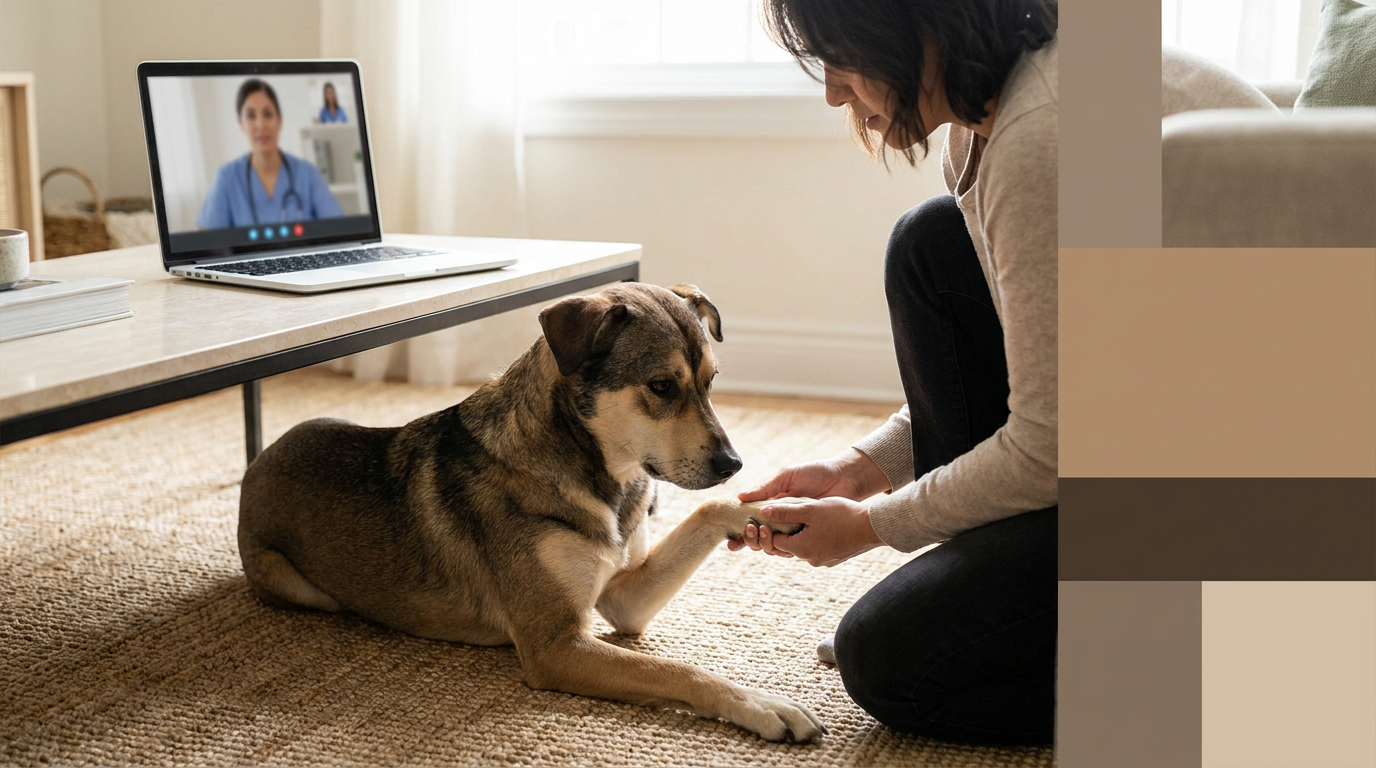
Dog limping is a common concern for pet owners who notice their dog favoring a front or back leg after play, waking up stiff, or showing subtle changes in gait.
Limping can stem from minor issues like a foreign object between the toes, a torn nail, or a mild muscle strain, as well as more serious conditions such as joint arthritis, ligament injury, or trauma from a fall.
Dog limping is addressed by RexVet's 24/7 symptom triage service, which lets you connect with a licensed veterinarian via video to examine the limp, advise on home care like rest or cold compress, and determine if prescription NSAIDs or joint supplements are needed, with medications filled through rexvetrx and shipped to your door. Gabapentin is a human-labeled drug, and a controlled substance in Virginia, so a veterinarian needs to examine your pet in person before prescribing it.
If the dog cannot bear weight, shows swelling, visible deformity, or signs of severe pain, seek in-person emergency care ; otherwise, a virtual visit often provides enough guidance, and the RexVet Family Plan covers every pet in your household for one affordable, one-time price.
Why Dogs Limp: Common Causes to Know
Dog Limping: Causes and What to Do
Why Dogs Limp
Limping is a common symptom that signals discomfort or physical impairment. Understanding Dog Limping: Causes and When Online Vet Advice Can Help allows you to distinguish between a minor mishap and a situation requiring urgent intervention. Often, sudden lameness results from environmental factors like stepping on a sharp object, while gradual stiffness suggests long-term issues like osteoarthritis.
Dog Limping on the Front Leg
Front-leg favoring often points to shoulder strains or paw pad abrasions. Because dogs carry nearly 60 percent of their body weight on their front limbs, even a minor injury can significantly alter their gait.
Dog Limping on the Back Leg
Issues with the hind limbs frequently relate to the knee, specifically the cranial cruciate ligament. If your pet is hesitant to put weight down, it may indicate a soft tissue injury.
What If My Dog Is Limping but Not Crying?
Many pets hide pain instinctively. Silence does not mean they are fine; it simply means they are masking their vulnerability.
What You Should Not Give a Limping Dog
Never administer human pain relievers. These can be toxic and cause severe organ damage.
When Limping May Be Serious
Seek immediate care if you notice:
- Inability to stand or bear weight
- Visible bone deformity or open wounds
- Swelling accompanied by lethargy or fever
- Dragging of the limb
How Online Vet Advice Can Help
Using Dog Limping: Causes and When Online Vet Advice Can Help as a resource ensures you get professional guidance from home. Our team can assess movement via video to determine if rest or a prescription is appropriate.
Ask RexVet for $64.99
Before giving pain medication, talk to a licensed vet online for $64.99 with RexVet.
Limping in the Front Leg: What to Look For
When your pet experiences a front-leg injury, it often stems from high-impact activities like jumping off furniture or repetitive stress on hard surfaces. Because the front limbs support the majority of a dog's weight, even minor issues like a cracked claw, a thorn embedded in the pad, or a strained bicep tendon can lead to noticeable discomfort. Understanding Dog Limping: Causes and When Online Vet Advice Can Help is essential because early intervention prevents these minor aches from becoming chronic mobility issues.
Our virtual triage platform allows you to show a licensed veterinarian exactly how your dog moves in real-time, which is often more accurate than a static clinic visit where stress might mask symptoms. By mastering Dog Limping: Causes and When Online Vet Advice Can Help, you can distinguish between a simple rest-and-recover scenario and a situation requiring professional diagnostics. Whether it is a soft tissue sprain or an early sign of shoulder arthritis, our team provides tailored home-care protocols, including safe, non-toxic management strategies. Before assuming the worst or waiting for the limp to worsen, consult with a professional who can guide your next steps with confidence and care.
Limping in the Back Leg: Signs and Possible Issues
When your dog experiences discomfort in the hindquarters, identifying the root cause is vital for recovery. The back legs are complex structures prone to specific issues like cranial cruciate ligament tears, which often occur during sudden turns or high-energy play. Other common culprits include hip dysplasia, patellar luxation, or even simple muscle fatigue from overexertion. Understanding Dog Limping: Causes and When Online Vet Advice Can Help allows you to distinguish between a minor strain that requires rest and a structural injury that needs professional intervention.
Because hind-leg lameness can quickly lead to compensatory issues in the front limbs due to shifted weight, prompt assessment is recommended. By utilizing virtual triage, you can receive a professional gait analysis from the comfort of your home. This process helps you decide if your pet needs strict cage rest, specific anti-inflammatory support, or an in-person diagnostic workup. Mastering Dog Limping: Causes and When Online Vet Advice Can Help ensures you avoid unnecessary emergency room visits while keeping your companion comfortable. Before giving pain medication, talk to a licensed vet online for $64.99 with RexVet.
My Dog Is Limping but Shows No Pain: What It Means
When your pet exhibits a subtle change in gait without whimpering, it is easy to assume they are fine. However, Dog Limping: Causes and When Online Vet Advice Can Help is a critical topic because dogs are stoic creatures that often mask significant discomfort. A lack of vocalization does not equate to an absence of pain; it is an evolutionary survival trait to avoid appearing vulnerable.
You should monitor for subtle indicators like reluctance to jump on furniture, stiffness after resting, or a slight head bob when walking. If the limp persists for more than twenty-four hours, it warrants professional attention. Understanding Dog Limping: Causes and When Online Vet Advice Can Help allows you to utilize our 24/7 virtual triage to assess if the issue is a minor soft tissue strain or something requiring diagnostics. By connecting with a licensed veterinarian via video, you can receive expert guidance on whether to initiate rest, apply cold therapy, or pursue a prescription through our pharmacy. This proactive approach ensures your dog receives appropriate care while avoiding unnecessary stress and expense associated with emergency clinic visits for non-urgent mobility concerns.
What Not to Give a Limping Dog (Avoid Human Meds)
When your pet is struggling with mobility, the temptation to reach into your medicine cabinet is strong, but it is dangerous. Human pain relievers like ibuprofen, naproxen, and acetaminophen are highly toxic to dogs and can cause fatal kidney failure, liver damage, or severe gastrointestinal ulcers. Even a single dose meant for a human can be life-threatening for a small dog.
Instead of risking your pet's safety, rely on professional guidance. Understanding Dog Limping: Causes and When Online Vet Advice Can Help ensures you avoid these toxic pitfalls. Licensed veterinarians can provide safe, species-appropriate alternatives like specific anti-inflammatory medications or joint supplements available through our pharmacy. These options are formulated for canine physiology, ensuring effective pain management without the risks associated with human drugs.
By choosing Dog Limping: Causes and When Online Vet Advice Can Help, you gain access to expert triage that prioritizes safety. Before administering any medication, talk to a licensed vet online for $64.99 with RexVet. We provide the peace of mind you need to help your companion recover safely and comfortably from the convenience of your own home.
When Limping Might Be Serious: Red‑Flag Symptoms
While many minor mobility issues resolve with rest, certain situations demand immediate professional intervention. Recognizing these red flags is a vital part of understanding Dog Limping: Causes and When Online Vet Advice Can Help. You must seek urgent in-person care if your pet displays an inability to bear any weight on the limb, shows a visible bone deformity, or has an open wound with active bleeding. Additionally, sudden swelling that feels hot to the touch or is accompanied by systemic signs like lethargy , fever, or persistent panting suggests a severe injury or infection that cannot wait.
If you are uncertain about the severity, Dog Limping: Causes and When Online Vet Advice Can Help serves as your first line of defense. Our licensed veterinarians can provide a remote gait assessment to determine if your dog requires emergency imaging or if the situation is manageable at home. By utilizing our 24/7 triage, you avoid the high costs and stress of an unnecessary emergency room visit. For non-urgent cases, we guide you through safe recovery steps, ensuring you have the right support. Always prioritize safety when assessing your pet's mobility.
How an Online Vet Can Help Assess Your Dog’s Limp
When you notice your pet favoring a limb, a video consultation becomes an invaluable diagnostic tool. During a virtual session, a licensed veterinarian can observe your dog's gait in real-time, allowing them to spot subtle compensations that might be missed in a high-stress clinic environment. This remote assessment is a core component of Dog Limping: Causes and When Online Vet Advice Can Help, as it allows the expert to guide you through a physical examination of the paw, joints, and muscles right from your living room.
The vet may ask you to walk your dog across the room or perform gentle range-of-motion checks while they watch via secure video. Based on these visual cues, they provide immediate professional triage to determine if the issue is a minor soft-tissue strain requiring rest or a more complex injury needing imaging. By utilizing Dog Limping: Causes and When Online Vet Advice Can Help, you receive actionable home-care instructions—such as specific icing techniques or activity restrictions—while avoiding unnecessary emergency room costs. This proactive approach ensures your dog gets the right support quickly and comfortably.
Using RexVet for Quick, Affordable Vet Advice
When your pet is struggling with mobility, waiting for an appointment can be stressful and costly. Dog Limping: Causes and When Online Vet Advice Can Help provides a streamlined solution for concerned pet parents. For just $64.99, RexVet connects you with a licensed veterinarian who can perform a remote gait analysis via video call. This professional triage helps you determine if your dog needs immediate emergency care or if the issue can be safely managed with rest and monitoring at home.
By choosing Dog Limping: Causes and When Online Vet Advice Can Help, you gain access to expert guidance that avoids the high fees of traditional emergency clinics. Our veterinarians can provide tailored home-care protocols, advise on safe, non-toxic pain management, and even issue prescriptions for joint supplements or anti-inflammatories if needed. This proactive, cost-effective approach ensures your companion receives the right care without the stress of an unnecessary clinic visit. Before you worry about potential injuries or reach for human medications, talk to a licensed vet online for $64.99 with RexVet to get professional answers quickly.
Need an Expert Opinion on This Topic?
Book a video visit with a licensed vet, evenings and weekends included
See open timesFrequently Asked Questions
Why is my dog limping but not crying?
It is a common misconception that a dog must vocalize pain to be injured. Dogs are experts at masking discomfort as a survival instinct. When researching Dog Limping: Causes and When Online Vet Advice Can Help, remember that a subtle limp, holding a paw up, or shifting weight is often the only sign of pain. Your dog might be suffering from a minor sprain, a thorn in their pad, or chronic arthritis that developed slowly over time.
Should I let my dog rest if they are limping?
Yes, rest is usually the first step in home care. If your dog is suddenly limping, restrict their activity by avoiding long walks, jumping on furniture, or rough play for 24 to 48 hours. During this period, monitor their gait closely. If the limp persists despite rest, it is time to consider Dog Limping: Causes and When Online Vet Advice Can Help by scheduling a virtual consultation with a RexVet licensed veterinarian to determine the next steps.
Can I give my dog human pain medicine?
Never give your dog human pain medication like ibuprofen, naproxen, or acetaminophen. These are highly toxic to pets and can cause severe kidney failure, stomach ulcers, or even death. If you are concerned about your pet's discomfort, please consult our experts. A RexVet veterinarian can safely evaluate your pet's symptoms and, if appropriate, prescribe pet-safe medication that can be delivered directly to your door through our pharmacy services.
When is limping considered an urgent veterinary matter?
Limping becomes an emergency when you notice specific red flags. You should seek immediate in-person care if there is:
- A visible deformity or bone protrusion
- An inability to bear any weight on the limb
- Severe swelling or heat in the area
- Open wounds or heavy bleeding
- Signs of trauma, such as being hit by a car
In these cases, do not wait; proceed to the nearest emergency clinic immediately.
How can an online vet help with a limping dog?
An online vet visit is a perfect starting point for Dog Limping: Causes and When Online Vet Advice Can Help. Through a secure video call, our licensed veterinarians can observe your dog's gait, ask targeted questions about their history, and provide a professional assessment. We can determine if the issue can be managed with home care, if a prescription is necessary, or if an in-person visit for X-rays is truly required, saving you time and stress.
Does RexVet cover chronic conditions like arthritis?
Yes, RexVet is designed to support ongoing health, including managing chronic conditions like arthritis. If your dog has a known history of joint pain, our vets can help you monitor their progress, adjust their care plan, or manage long-term prescriptions where state rules allow. By using our platform, you can access affordable guidance and joint supplements without the stress of frequent clinic trips, ensuring your dog stays comfortable and active for as long as possible.
FAQs
Why is my dog limping but not crying?
It is a common misconception that a dog must vocalize pain to be injured. Dogs are experts at masking discomfort as a survival instinct. When researching dog limping: causes and when online vet advice can help, remember that a subtle limp, holding a paw up, or shifting weight is often the only sign of pain. Your dog might be suffering from a minor sprain, a thorn in their pad, or chronic arthritis that developed slowly over time.
Should I let my dog rest if they are limping?
Yes, rest is usually the first step in home care. If your dog is suddenly limping, restrict their activity by avoiding long walks, jumping on furniture, or rough play for 24 to 48 hours. During this period, monitor their gait closely. If the limp persists despite rest, it is time to consider dog limping: causes and when online vet advice can help by scheduling a virtual consultation with a RexVet licensed veterinarian to determine the next steps.
Can I give my dog human pain medicine?
Never give your dog human pain medication like ibuprofen, naproxen, or acetaminophen. These are highly toxic to pets and can cause severe kidney failure, stomach ulcers, or even death. If you are concerned about your pet's discomfort, please consult our experts. A RexVet veterinarian can safely evaluate your pet's symptoms and, if appropriate, prescribe pet-safe medication that can be delivered directly to your door through our pharmacy services.
When is limping considered an urgent veterinary matter?
Limping becomes an emergency when you notice specific red flags. You should seek immediate in-person care if there is:
- A visible deformity or bone protrusion
- An inability to bear any weight on the limb
- Severe swelling or heat in the area
- Open wounds or heavy bleeding
- Signs of trauma, such as being hit by a car
In these cases, do not wait; proceed to the nearest emergency clinic immediately.
How can an online vet help with a limping dog?
An online vet visit is a perfect starting point for dog limping: causes and when online vet advice can help. Through a secure video call, our licensed veterinarians can observe your dog's gait, ask targeted questions about their history, and provide a professional assessment. We can determine if the issue can be managed with home care, if a prescription is necessary, or if an in-person visit for X-rays is truly required, saving you time and stress.
Does RexVet cover chronic conditions like arthritis?
Yes, RexVet is designed to support ongoing health, including managing chronic conditions like arthritis. If your dog has a known history of joint pain, our vets can help you monitor their progress, adjust their care plan, or manage long-term prescriptions where state rules allow. By using our platform, you can access affordable guidance and joint supplements without the stress of frequent clinic trips, ensuring your dog stays comfortable and active for as long as possible.
Medically Reviewed
Reviewed by Dr. Tiffany Delacruz, DVM — licensed veterinarian and CEO of RexVet. Last reviewed June 4, 2026.
Content is for informational purposes and does not replace professional veterinary advice.
Chief Executive Officer · Licensed Veterinarian
Dr. Delacruz is a licensed Doctor of Veterinary Medicine specializing in preventive care and veterinary telehealth. She reviews all health content on RexVet to ensure accuracy and clinical relevance.
Sources & References
- · American Veterinary Medical Association — Telehealth Guidelines
- · AVMA — Pet Care Resources
- · U.S. FDA — Animal & Veterinary