
Hot Spots on Dogs: How to Spot, Soothe, and Prevent Them
By RexVet Team | Reviewed by Dr. Tiffany Delacruz, DVM
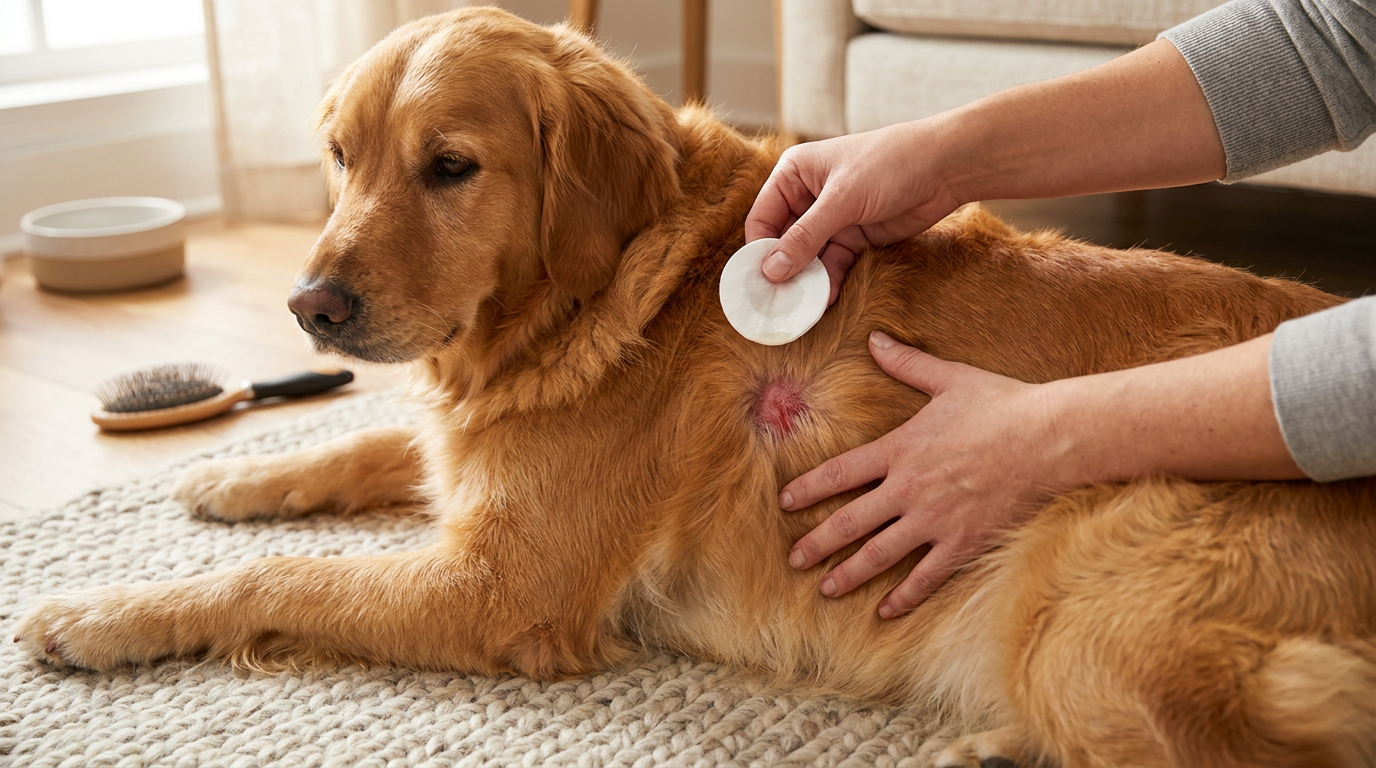
Finding a sudden, angry patch of skin on your pet can be incredibly alarming for any owner. Hot spots on dogs, technically known as acute moist dermatitis, are common, painful skin lesions that can appear almost overnight. Whether your dog has a dense double coat or is simply prone to allergies, understanding Hot Spots on Dogs is essential for maintaining their comfort and health. These sores often start as small red areas but can quickly spread due to intense itching and biting.
Because these lesions can escalate rapidly, early intervention is vital to stop the cycle of infection and discomfort. You do not need to wait for a stressful trip to a physical clinic to get expert guidance. By using our telehealth services, a licensed U.S. vet can review your dog's photos online to help you determine the best path forward. Mastering Hot Spots on Dogs ensures you are prepared to manage your pet's skin health effectively. With the right support, you can soothe your dog's irritation and address the underlying cause before the situation worsens.
What Is a Hot Spot?
At its core, a hot spot is acute moist dermatitis, a localized skin infection that develops with alarming speed. When your dog experiences intense itching, they may bite or lick the area, creating a vicious cycle of inflammation. This rapid-fire self-trauma often leads to a raw, oozing, and painful lesion that can expand in mere hours. Learning about Hot Spots on Dogs is the first step in protecting your pet from this common but distressing condition.
These sores are not just surface-level irritation; they are often a sign of an underlying issue like flea allergies, ear infections, or environmental sensitivities. Because the skin barrier is compromised, bacteria thrive in the warm, moist environment created by the dog's own saliva. If you are concerned about a new lesion, remember that a licensed U.S. vet can review your dog's photos online to provide professional guidance. Understanding Hot Spots on Dogs allows you to act quickly, ensuring your companion gets the relief they need without the stress of an emergency clinic visit.
Why Hot Spots Form on Dogs
Understanding Hot Spots on Dogs requires looking at why these painful lesions develop. Moisture trapped against the skin is a primary culprit, often occurring when a dog’s thick undercoat fails to dry completely after a swim or a bath. This damp environment creates a perfect breeding ground for bacteria, leading to rapid inflammation.
Beyond moisture, breed predisposition plays a significant role. Breeds with dense, double coats like Golden Retrievers or German Shepherds are statistically more prone to these issues because their fur hides early signs of irritation. Furthermore, allergies—whether to fleas, food, or pollen—frequently trigger the initial itch. When a dog begins to chew or lick to find relief, they inadvertently introduce bacteria into the skin, turning a minor itch into a severe infection. Mastering Hot Spots on Dogs means recognizing that these triggers are often interconnected. If your pet is struggling with persistent scratching, remember that a licensed U.S. vet can review your dog's photos online to help identify the specific cause and guide you toward effective management strategies.
How to Identify One Early
Catching Hot Spots on Dogs requires a keen eye for subtle changes in your pet's daily routine. Often, the first sign is not the sore itself, but a change in behavior; your dog may become obsessively focused on a specific spot, licking or biting at it with unusual intensity. Because these lesions are essentially open, infected wounds, they often emit a distinct, musty, or sweet odor that signals bacterial growth beneath the fur. Visually, you might notice matted hair clumped together by discharge, which hides the raw, red skin underneath.
If you suspect an issue, you can book a video visit with a vet to get a professional opinion before the area grows. Since these patches can double in size within hours, observing your dog for sudden restlessness or irritability is crucial. Mastering Hot Spots on Dogs means acting at the first sign of redness. By staying vigilant, you can manage Hot Spots on Dogs effectively and keep your companion comfortable.
Immediate At-Home Care for Mild Cases
When managing Hot Spots on Dogs, your primary goal is to stop the cycle of trauma. If you catch a mild case early, gently trim the hair around the lesion using blunt-nosed safety scissors to allow the skin to breathe. Use a cool, damp cloth to carefully dab away any discharge, keeping the area clean and dry. Never apply human ointments or alcohol, as these can sting and worsen the inflammation.
Preventing further licking is essential for recovery. Placing a recovery cone on your dog is often the most effective way to protect the site from their tongue. Because these sores can harbor deep bacterial infections, you may eventually require prescription topical or oral care from a licensed U.S. vet to facilitate healing. Do not wait for the wound to expand or become painful; early intervention is key to managing Hot Spots on Dogs. If the area looks deep or fails to improve within 24 hours, seek professional advice immediately to ensure your pet stays comfortable and infection-free.
When to See a Veterinarian
When managing Hot Spots on Dogs, knowing exactly when to seek professional help is critical for your pet's recovery. While minor irritation might be manageable, certain symptoms indicate a deeper issue requiring a veterinary exam. You must contact a professional if you notice the lesion spreading rapidly, the skin appearing deep or ulcerated, or if your dog develops a fever and lethargy. Furthermore, if you see multiple sites appearing simultaneously, it often suggests a systemic flea allergy or severe underlying condition that home care cannot resolve.
Ignoring these signs can lead to severe dog skin infection, causing unnecessary suffering. If your dog shows no signs of improvement after 24 hours of diligent care, do not wait. You can easily access support through our platform to avoid the stress of an emergency clinic. To get started, start at rexvet.org/book-appointment to connect with a licensed veterinarian who can assess your pet's condition. Understanding Hot Spots on Dogs means recognizing that professional guidance is an essential tool in your home care kit.
How RexVet Can Help
When you notice a raw, inflamed patch, virtual triage is your most efficient path to relief. RexVet specializes in rapid skin assessments, allowing our team to evaluate the severity of the lesion through high-quality images and video. This digital approach is vital for Hot Spots on Dogs, as it helps you distinguish between a surface irritation and a deep infection that requires immediate medical intervention.
By leveraging our platform, you skip the stress of a crowded waiting room while receiving expert guidance tailored to your pet's unique needs. Our vets can determine if your pet needs specific topical support or if the issue stems from an underlying allergy that requires a long-term management plan. Because these sores can change rapidly, having a professional see your dog's skin over a live video visit allows for proactive care. Mastering Hot Spots on Dogs is easier when you have a direct line to veterinary support. Take control of your dog's skin health today and book a video visit with a licensed vet.
Proactive Prevention Strategies
Maintaining a consistent grooming routine is the most effective way to practice Hot Spots on Dogs. Regular brushing not only removes loose fur that traps moisture but also allows you to inspect the skin for early signs of irritation. For breeds prone to thick undercoats, ensure the skin is completely dry after baths or swimming sessions; using a high-velocity dryer can reach the base of the coat where dampness lingers. Beyond physical maintenance, proactive allergy management is vital, as up to 80% of recurring skin issues are linked to environmental or food sensitivities. If your dog suffers from seasonal allergies, wiping their paws and belly after outdoor play can significantly reduce allergen exposure. By mastering Hot Spots on Dogs, you create a healthier environment for your pet. Implementing these habits reduces the likelihood of painful flare-ups and long-term skin damage. If you notice persistent scratching despite these efforts, remember that you can always start at rexvet.org/book-appointment to consult with a professional about creating a tailored prevention plan for your dog.
Managing Chronic Skin Issues Together
Managing chronic skin issues requires a proactive mindset, especially when dealing with recurring hot spots on dogs. Because these lesions often signal underlying health imbalances, consistent monitoring is your best defense. By integrating regular skin checks into your routine, you can catch flare-ups before they become severe. Learning Hot Spots on Dogs is a foundational skill for any dedicated pet owner. When you notice a cycle of irritation, remember that a licensed U.S. vet can review your dog's photos online to provide tailored advice.
Consistency is key to long-term success. If your dog suffers from seasonal allergies, early intervention with a vet-approved management plan can stop the itch-scratch cycle entirely. We recommend keeping a digital log of your pet's skin health to track patterns and triggers. Mastering Hot Spots on Dogs means you are never navigating these challenges alone. For ongoing support and rapid assessments, you can start at rexvet.org/book-appointment to connect with our team. By staying ahead of skin inflammation, you ensure your companion stays comfortable, happy, and healthy throughout the year.
What can I put on my dog's hot spot to soothe it?
When exploring Hot Spots on Dogs, many owners wonder about safe topical applications. While it is tempting to reach for household items, most human products can cause further irritation or toxicity if ingested. Because these sores involve a dog skin infection, the most effective approach is to keep the area clean and dry while avoiding harsh chemicals. If you are unsure what is safe, remember that a licensed U.S. vet can review your dog's photos online to provide professional guidance.
Understanding Hot Spots on Dogs often involves addressing the underlying cause, such as a flea allergy or environmental sensitivity. Rather than guessing with over-the-counter creams, you can access expert triage to determine if your pet requires specific medical intervention. Our team helps you navigate the recovery process, ensuring you have the right tools to manage excessive licking and promote healing. By prioritizing professional advice, you avoid the risks of DIY treatments and ensure your companion receives the targeted care they deserve for acute moist dermatitis.
How to make a dog stop having a hot spot?
When navigating Hot Spots on Dogs, it is vital to recognize that these painful lesions often mask deeper health struggles. While surface-level care provides temporary relief, addressing the underlying cause—such as an undiagnosed flea allergy or chronic environmental sensitivity—is the only way to stop the cycle of excessive licking. Many owners find that early intervention with a licensed U.S. vet can review your dog's photos online, saving them from the high costs and stress of an emergency clinic visit.
As you master Hot Spots on Dogs, consider that nearly 40% of skin-related veterinary consultations can be effectively triaged through a virtual platform. This remote approach allows for rapid assessment of dog skin sores, ensuring your pet receives a timely recovery plan. By utilizing professional guidance, you can implement a targeted strategy to manage flare-ups before they escalate into severe pyotraumatic dermatitis. Ultimately, learning Hot Spots on Dogs empowers you to act as your pet's primary advocate, ensuring they remain comfortable and healthy through proactive, affordable care.
How to get a dog to leave a hot spot alone?
When your dog is fixated on a raw patch, stopping the lick-chew cycle is your top priority. To master Hot Spots on Dogs, you must physically block access to the site. A recovery cone is the gold standard, as it prevents the tongue from introducing bacteria into the open wound. Without this barrier, even the best topical treatments will fail because the dog will simply lick the medication away.
Beyond physical barriers, you should focus on keeping the area clean. Gently clip away surrounding fur to improve airflow, which is critical for healing acute moist dermatitis. If you feel overwhelmed, remember that a licensed U.S. vet can review your dog's photos online to confirm if the lesion is a simple hot spot or a deeper dog skin infection requiring antibiotics. Learning Hot Spots on Dogs means knowing when to stop home care and seek expert help. If the spot grows or smells, start at rexvet.org/book-appointment to get a professional assessment today.
Frequently Asked Questions
What exactly are hot spots on dogs and how do they start?
Hot spots, medically known as acute moist dermatitis, are red, inflamed, and often oozing skin lesions. They develop when a dog triggers an itch-scratch cycle, usually due to allergies, insect bites, or trapped moisture. As the dog licks or chews the area, they introduce bacteria into the skin, causing a rapid infection. Understanding hot spots on dogs is vital because these sores can grow from the size of a coin to a large, painful patch in just a few hours.
Can I treat hot spots on my dog at home without seeing a vet?
For very mild, surface-level irritation, you can gently clean the area with mild, diluted antiseptic and keep the skin dry. However, because hot spots on dogs are often deep-seated infections, they frequently require prescription-strength topicals or oral antibiotics that only a licensed veterinarian can provide. If you are researching hot spots on dogs, remember that delaying professional care often leads to a more painful, larger wound that is harder to treat later.
How can I tell if my dog's skin issue is a hot spot or something else?
Hot spots are distinct because they appear suddenly, feel hot to the touch, and are often moist or crusty. You might notice hair loss, a foul odor, or your dog obsessively licking one specific spot. While other skin issues like ringworm or mange exist, the rapid onset is a hallmark of a hot spot. If you are unsure, using a service like RexVet to get a professional triage can help you distinguish between a simple irritation and a serious infection.
Why do hot spots keep coming back on my dog?
If your dog suffers from recurring hot spots, it is likely that an underlying cause—such as environmental allergies, food sensitivities, or flea infestations—has not been addressed. Simply treating the skin lesion is not enough; you must manage the root trigger. Through our virtual consultations, we help owners identify these triggers and create long-term management plans. Learning about hot spots on dogs includes recognizing that chronic recurrence requires a proactive, ongoing veterinary strategy.
Is a virtual vet visit effective for diagnosing hot spots?
Yes, virtual veterinary care is highly effective for hot spots. Because these lesions are visible, a clear photo or short video allows our licensed veterinarians to assess the severity of the infection and determine if prescription medication is necessary. This approach is often less stressful for your dog than a trip to an emergency clinic. By utilizing telehealth, you can get the guidance you need on hot spots on dogs from the comfort of your home.
What should I do if my dog won't stop licking the hot spot?
Preventing your dog from licking is the most important step in the healing process. If you cannot stop the behavior, you should use an Elizabethan collar, also known as a recovery cone. Licking keeps the area moist and introduces more bacteria, which prevents healing. If the licking persists despite the cone, contact a professional to discuss pain management or anti-itch options. Always remember that early intervention is key when managing hot spots on dogs.
FAQs
What exactly are hot spots on dogs and how do they start?
Hot spots, medically known as acute moist dermatitis, are red, inflamed, and often oozing skin lesions. They develop when a dog triggers an itch-scratch cycle, usually due to allergies, insect bites, or trapped moisture. As the dog licks or chews the area, they introduce bacteria into the skin, causing a rapid infection. Understanding hot spots on dogs: how to spot, soothe, and prevent them is vital because these sores can grow from the size of a coin to a large, painful patch in just a few hours.
Can I treat hot spots on my dog at home without seeing a vet?
For very mild, surface-level irritation, you can gently clean the area with mild, diluted antiseptic and keep the skin dry. However, because hot spots on dogs are often deep-seated infections, they frequently require prescription-strength topicals or oral antibiotics that only a licensed veterinarian can provide. If you are researching hot spots on dogs: how to spot, soothe, and prevent them, remember that delaying professional care often leads to a more painful, larger wound that is harder to treat later.
How can I tell if my dog's skin issue is a hot spot or something else?
Hot spots are distinct because they appear suddenly, feel hot to the touch, and are often moist or crusty. You might notice hair loss, a foul odor, or your dog obsessively licking one specific spot. While other skin issues like ringworm or mange exist, the rapid onset is a hallmark of a hot spot. If you are unsure, using a service like RexVet to get a professional triage can help you distinguish between a simple irritation and a serious infection.
Why do hot spots keep coming back on my dog?
If your dog suffers from recurring hot spots, it is likely that an underlying cause—such as environmental allergies, food sensitivities, or flea infestations—has not been addressed. Simply treating the skin lesion is not enough; you must manage the root trigger. Through our virtual consultations, we help owners identify these triggers and create long-term management plans. Learning about hot spots on dogs: how to spot, soothe, and prevent them includes recognizing that chronic recurrence requires a proactive, ongoing veterinary strategy.
Is a virtual vet visit effective for diagnosing hot spots?
Yes, virtual veterinary care is highly effective for hot spots. Because these lesions are visible, a clear photo or short video allows our licensed veterinarians to assess the severity of the infection and determine if prescription medication is necessary. This approach is often less stressful for your dog than a trip to an emergency clinic. By utilizing telehealth, you can get the guidance you need on hot spots on dogs: how to spot, soothe, and prevent them from the comfort of your home.
What should I do if my dog won't stop licking the hot spot?
Preventing your dog from licking is the most important step in the healing process. If you cannot stop the behavior, you should use an Elizabethan collar, also known as a recovery cone. Licking keeps the area moist and introduces more bacteria, which prevents healing. If the licking persists despite the cone, contact a professional to discuss pain management or anti-itch options. Always remember that early intervention is key when managing hot spots on dogs: how to spot, soothe, and prevent them.
Medically Reviewed
Reviewed by Dr. Tiffany Delacruz, DVM — licensed veterinarian and CEO of RexVet. Last reviewed May 18, 2026.
Content is for informational purposes and does not replace professional veterinary advice.
Chief Executive Officer · Licensed Veterinarian
Dr. Delacruz is a licensed Doctor of Veterinary Medicine specializing in preventive care and veterinary telehealth. She reviews all health content on RexVet to ensure accuracy and clinical relevance.
Sources & References
- · American Veterinary Medical Association — Telehealth Guidelines
- · AVMA — Pet Care Resources
- · U.S. FDA — Animal & Veterinary
Need an Expert Opinion on This Topic?
Connect with a certified vet via video call in minutes
Talk to Vet Now