
Dog Throwing Up Yellow: Causes, Yellow Bile, and When to Worry
By RexVet Team | Reviewed by Dr. Tiffany Delacruz, DVM
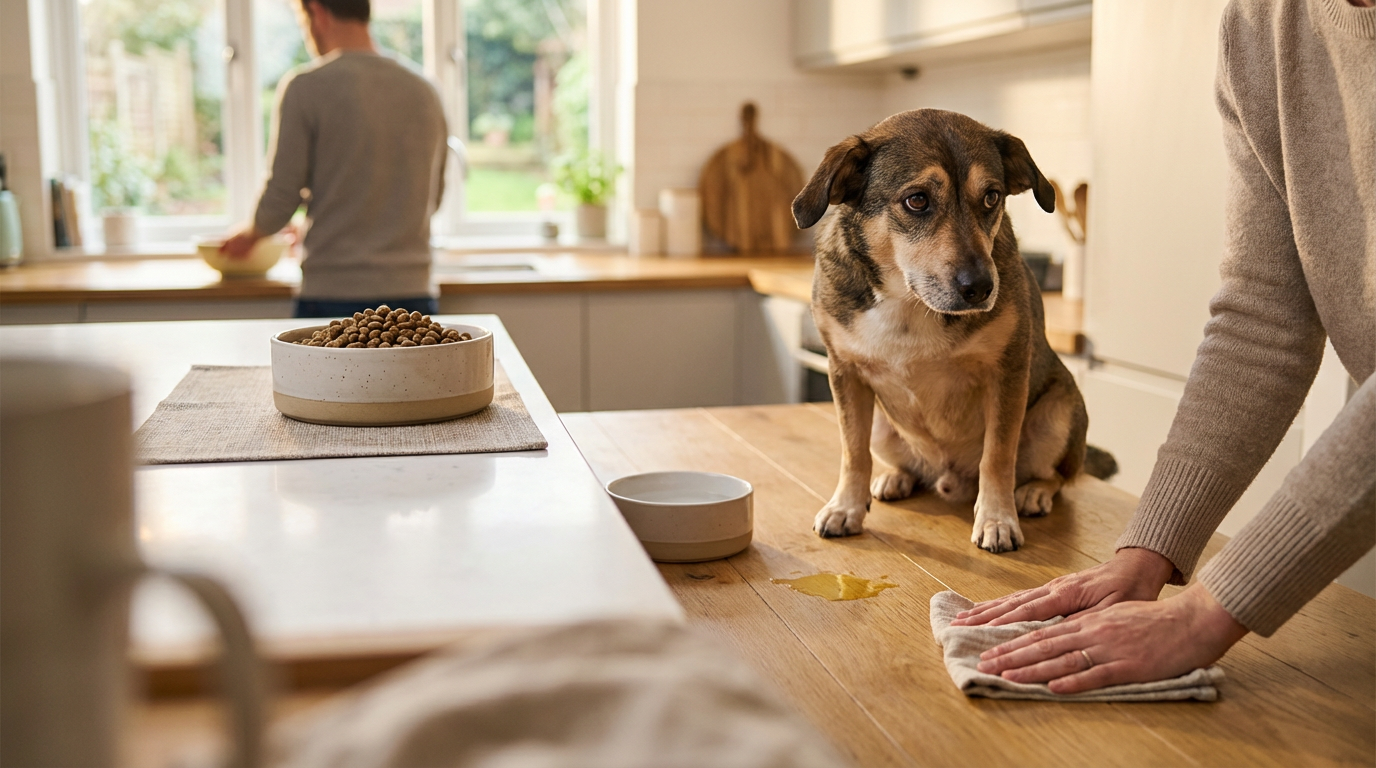
Finding your pet sick is always stressful, especially when you notice your dog throwing up yellow fluid. This yellow fluid is typically yellow bile, a digestive substance produced by the liver and stored in the gallbladder. When a dog experiences an empty stomach for an extended period, bile can irritate the stomach lining, leading to vomiting. While this often relates to bilious vomiting syndrome, it can also signal more complex issues like gastrointestinal disease, pancreatitis, or an intestinal blockage.
Understanding the difference between occasional stomach upset and a medical emergency is vital for every owner. While mild cases might resolve with a bland diet, persistent vomiting can quickly lead to dehydration and require immediate veterinary attention. This guide on dogs throwing up yellow bile provides the essential knowledge to help you decide whether to monitor your dog at home or book an appointment with a professional. We aim to help you navigate these symptoms with confidence, ensuring your companion receives the best care when they need it most.
What Is Yellow Bile and Why Is It Vomited?
When exploring why dogs vomit yellow bile, it is helpful to understand that bile is a normal digestive secretion. Produced by the liver and stored in the gallbladder, this fluid acts as a detergent to break down fats during digestion. Under normal conditions, it travels through the small intestine, but when a dog experiences an empty stomach for too long, the backflow of bile into the stomach can cause significant irritation to the sensitive lining.
This irritation is a primary trigger for the retching reflex. While occasional episodes might be linked to minor dietary indiscretion, persistent issues often point toward underlying concerns. Understanding yellow vomiting in dogs requires recognizing these common triggers for gastric distress:
- Bilious vomiting syndrome occurring frequently in the early morning hours.
- Pancreatitis or severe inflammation requiring immediate veterinary attention.
- Intestinal blockage preventing normal transit and causing backup.
- Gastrointestinal disease or chronic sensitivities to specific food ingredients.
If your pet shows signs of lethargy or dehydration alongside this symptom, do not wait to seek professional guidance. Early intervention is key to preventing complications from conditions like gastrointestinal disease.
Common Reasons Your Dog Is Throwing Up Yellow
Beyond the common physiological triggers, understanding why your dog throws up yellow requires looking at how daily habits influence gut health. Dietary indiscretion, such as scavenging trash or consuming rich table scraps, often forces the stomach to overproduce acids, leading to the expulsion of yellow-tinted fluid. When your pet engages in these behaviors, the sudden influx of fat can overwhelm their digestive enzymes, causing a temporary but uncomfortable reaction. Keeping a consistent feeding schedule is a simple way to mitigate these risks, as an empty stomach often exacerbates the irritation caused by digestive juices.
While minor dietary slip-ups are frequent, persistent issues related to yellow bile should never be ignored. If your dog exhibits a loss of appetite or shows signs of pain after eating, you should consult a professional to rule out more severe conditions. Early observation allows you to distinguish between a one-time upset and a chronic problem that necessitates veterinary attention . By maintaining a bland diet when mild symptoms appear, you provide the stomach time to recover, but always prioritize professional guidance if the vomiting frequency increases or your dog appears lethargic.
Recognizing Bilious Vomiting Syndrome in Your Dog
When discussing yellow vomit in dogs, it is essential to define Bilious Vomiting Syndrome. This condition occurs when a dog has an empty stomach for an extended period, causing gastric juices to reflux into the stomach and irritate the lining. Owners often notice this as a small amount of yellow, frothy fluid, usually occurring in the early morning hours or late at night.
While this syndrome is common, understanding your dog's yellow vomit helps distinguish between simple hunger-based irritation and more severe medical concerns. Symptoms often include intermittent vomiting, restlessness before meals, or a lack of interest in food during the morning. If your dog displays these signs, adjusting their feeding schedule to include a small snack right before bedtime can often resolve the issue by preventing the stomach from remaining empty for too long.
However, if the vomiting becomes frequent, contains blood, or is accompanied by lethargy, it may signal underlying gastrointestinal disease or other systemic issues. In such cases, seeking veterinary attention is critical to rule out more dangerous conditions. Always monitor your pet closely and consult a professional if the behavior persists despite dietary adjustments.
Red Flag Symptoms That Require Immediate Veterinary Care
When navigating an episode of yellow vomiting, recognizing emergency red flags is essential for your pet's safety. While minor stomach upsets are common, certain signs indicate that your dog needs immediate veterinary attention. If you notice your pet is unable to keep water down, shows signs of extreme abdominal pain, or has pale gums, these are critical indicators that you should not wait to seek help. A yellow vomiting scenario becomes a true emergency if the vomiting is accompanied by blood, a hard or bloated abdomen, or collapse.
Symptom | Action Required |
|---|---|
Persistent vomiting | Contact your vet |
Lethargy or weakness | Emergency care |
Bloated, hard abdomen | Immediate vet visit |
Blood in vomit | Immediate vet visit |
Understanding when yellow vomit is serious involves watching for rapid changes in behavior. If your dog is acting normally, you might monitor them for a few hours. However, if they seem distressed, visit our booking page to schedule an urgent exam. Always prioritize professional assessment over home remedies to ensure your dog recovers safely.
How to Assess Your Dog’s Condition at Home
Assessing your pet at home requires a calm, systematic approach. When you notice your dog vomiting yellow bile, start by checking their general demeanor. Observe if your dog remains alert and responsive or if they appear listless, as lethargy is a major clinical indicator of systemic distress. Gently palpate their abdomen; a healthy belly should feel soft and pliable, whereas a hard, distended, or painful abdomen suggests an emergency like an intestinal blockage or pancreatitis. Checking hydration is equally vital. Lift the skin between their shoulder blades—it should snap back instantly. If it stays tented, your pet may be experiencing dehydration.
Understanding the severity of yellow vomiting also involves tracking frequency. If your dog vomits once but acts normally, monitor their intake of water and food closely. However, if the vomiting occurs multiple times within a few hours, you must seek veterinary attention. Keep a log of their last meal, any potential dietary indiscretion, and the exact appearance of the vomit. For professional guidance on whether to visit a clinic, you can always book a consultation through our appointment portal to ensure your dog receives timely care.
Safe Steps to Settle an Upset Stomach
When your pet is recovering, gentle home care is essential. If you are researching how to help a dog vomiting bile, start by offering small, frequent meals rather than one large portion. This helps keep the digestive tract moving and prevents the stomach from becoming completely empty, which is a common trigger for bile irritation.
Hydration is your top priority. Offer ice chips or small amounts of water every hour to prevent dehydration. If your dog can keep fluids down for four hours, you may introduce a bland diet consisting of plain, boiled chicken and white rice. Keep portions small—roughly one-quarter of their usual meal size—to avoid overtaxing the gut.
Regarding at-home care for yellow vomit, always avoid human medications like aspirin or ibuprofen, as these can cause dangerous stomach ulcers. If you feel overwhelmed, our team at RexVet is here to help. You can book an appointment online to discuss your dog's recovery plan. Remember, if your dog refuses food for more than 24 hours or seems unusually weak, professional intervention is necessary to rule out serious gastrointestinal disease.
When to Contact a Veterinarian for Help
Deciding when to seek professional help for a dog bringing up yellow bile is a common challenge for pet parents. While occasional vomiting might simply result from a minor dietary indiscretion, persistent issues often require veterinary attention . If you notice your dog is throwing up yellow bile more than twice in twenty-four hours, it is time to consult a professional. Chronic gastrointestinal disease or recurring pancreatitis can develop silently, making early diagnosis crucial for long-term health.
When researching bile vomiting, keep in mind that rapid fluid loss leads to dehydration, which can become life-threatening within hours for smaller breeds. If your dog refuses water or seems unable to keep any food down, do not rely on a bland diet alone. Instead, prioritize a clinical assessment to rule out an intestinal blockage. You can easily book an appointment with our team to ensure your companion receives the expert care they deserve. Early intervention remains the most effective way to manage bilious vomiting syndrome and prevent more severe complications from an empty stomach.
Preventing Future Episodes of Yellow Vomit
Establishing a consistent feeding routine is the most effective strategy for preventing future episodes of yellow bile vomiting. When a dog goes too long without food, the stomach environment becomes overly acidic. To stabilize gastric pH, try splitting your dog's daily caloric intake into three or four smaller meals rather than two large ones. This approach minimizes the time the stomach spends empty, which is a primary driver of bilious vomiting syndrome.
Diet management is equally critical for long-term gut health. High-quality, easily digestible proteins are less likely to cause irritation compared to fatty table scraps. If your pet is prone to sensitive digestion, consider a fiber-enriched diet, which can help regulate transit time. When researching ways to prevent yellow vomiting, remember that sudden diet changes often trigger distress. Always transition to new food over seven to ten days by mixing increasing amounts of the new kibble with the old. If these proactive adjustments do not reduce frequency, please visit our booking page to consult with a professional about potential underlying issues.
Managing Diet Transitions After a Vomiting Episode
When transitioning your pet back to regular meals after they have been vomiting yellow bile, patience is your best tool. Start by offering a bland diet consisting of one part boiled, skinless chicken to three parts plain white rice. This combination is gentle on the gut and helps soothe irritation caused by yellow bile. Serve only small, tablespoon-sized portions every three to four hours to prevent overwhelming the stomach.
As you manage your dog's yellow vomiting situation, monitor your dog closely for any recurrence of symptoms. If your dog successfully keeps these small meals down for twenty-four hours, you can slowly begin mixing in their regular kibble over the next three days. Avoid adding any treats, fats, or oils during this time, as these can trigger a relapse of gastrointestinal disease symptoms. If at any point your dog shows signs of lethargy or refuses to eat, stop the transition immediately and seek veterinary attention. Keeping a food log during this period is a highly effective way to track progress and ensure your pet is returning to their normal health baseline safely.
Frequently Asked Questions
What does it mean when my dog is throwing up yellow bile?
When you notice your dog throwing up yellow bile, it typically indicates that their stomach is empty. This yellow fluid is bile, a digestive juice produced by the liver. If a dog goes too long without eating, the bile can irritate the stomach lining, causing them to vomit. While often benign, it is important to monitor your pet closely. If the vomiting is frequent or accompanied by lethargy, it is time to seek veterinary attention to rule out underlying issues.
Could my dog throwing up yellow be a sign of Bilious Vomiting Syndrome?
Yes, Bilious Vomiting Syndrome is a common cause for a dog throwing up yellow bile, especially in the early morning. This happens when bile refluxes into the stomach when it is empty for an extended period. To help manage this, many veterinarians suggest feeding your dog a small meal right before bedtime to keep the stomach from staying empty for too long. If symptoms persist despite dietary adjustments, consult a professional to ensure there is no gastrointestinal disease present.
When should I be worried about my dog throwing up yellow?
While occasional yellow vomit may not be an emergency, you should seek veterinary attention if you notice any of the following red flags:
- The dog is lethargic or acting depressed.
- There is blood in the vomit or stool.
- The dog is experiencing repeated vomiting episodes.
- You suspect your dog has ingested a foreign object.
These signs could indicate serious conditions like an intestinal blockage or pancreatitis, which require immediate medical intervention rather than home monitoring.
How can I help my dog if they are throwing up yellow foam?
Yellow foam is essentially bile mixed with air. If your dog is otherwise acting normal, you might try offering a small, bland diet of boiled chicken and white rice. However, never give human medications without consulting a DVM, as these can be toxic. If the vomiting continues after a meal or if the dog refuses to eat, contact a vet immediately. Keeping a log of when the vomiting occurs can help your vet identify the root cause faster.
Is there a difference between food vomit and yellow bile?
Yes, there is a distinct difference. Food vomit contains partially digested kibble or treats, often suggesting dietary indiscretion or eating too quickly. In contrast, yellow bile is a liquid that appears when the stomach is entirely empty. Understanding this distinction is key to managing your dog's health. If you are unsure about the cause of your dog throwing up yellow, it is always safer to schedule a visit with a professional to rule out dehydration or other systemic issues.
FAQs
What does it mean when my dog is throwing up yellow bile?
When you notice your dog throwing up yellow bile, it typically indicates that their stomach is empty. This yellow fluid is bile, a digestive juice produced by the liver. If a dog goes too long without eating, the bile can irritate the stomach lining, causing them to vomit. While often benign, it is important to monitor your pet closely. If the vomiting is frequent or accompanied by lethargy, it is time to seek veterinary attention to rule out underlying issues.
Could my dog throwing up yellow be a sign of Bilious Vomiting Syndrome?
Yes, Bilious Vomiting Syndrome is a common cause for a dog throwing up yellow bile, especially in the early morning. This happens when bile refluxes into the stomach when it is empty for an extended period. To help manage this, many veterinarians suggest feeding your dog a small meal right before bedtime to keep the stomach from staying empty for too long. If symptoms persist despite dietary adjustments, consult a professional to ensure there is no gastrointestinal disease present.
When should I be worried about my dog throwing up yellow?
While occasional yellow vomit may not be an emergency, you should seek veterinary attention if you notice any of the following red flags:
- The dog is lethargic or acting depressed.
- There is blood in the vomit or stool.
- The dog is experiencing repeated vomiting episodes.
- You suspect your dog has ingested a foreign object.
These signs could indicate serious conditions like an intestinal blockage or pancreatitis, which require immediate medical intervention rather than home monitoring.
How can I help my dog if they are throwing up yellow foam?
Yellow foam is essentially bile mixed with air. If your dog is otherwise acting normal, you might try offering a small, bland diet of boiled chicken and white rice. However, never give human medications without consulting a DVM, as these can be toxic. If the vomiting continues after a meal or if the dog refuses to eat, contact a vet immediately. Keeping a log of when the vomiting occurs can help your vet identify the root cause faster.
Is there a difference between food vomit and yellow bile?
Yes, there is a distinct difference. Food vomit contains partially digested kibble or treats, often suggesting dietary indiscretion or eating too quickly. In contrast, yellow bile is a liquid that appears when the stomach is entirely empty. Understanding this distinction is key to managing your dog's health. If you are unsure about the cause of your dog throwing up yellow, it is always safer to schedule a visit with a professional to rule out dehydration or other systemic issues.
Medically Reviewed
Reviewed by Dr. Tiffany Delacruz, DVM — licensed veterinarian and CEO of RexVet. Last reviewed April 17, 2026.
Content is for informational purposes and does not replace professional veterinary advice.
Chief Executive Officer · Licensed Veterinarian
Dr. Delacruz is a licensed Doctor of Veterinary Medicine specializing in preventive care and veterinary telehealth. She reviews all health content on RexVet to ensure accuracy and clinical relevance.
Sources & References
- · American Veterinary Medical Association — Telehealth Guidelines
- · AVMA — Pet Care Resources
- · U.S. FDA — Animal & Veterinary
Need an Expert Opinion on This Topic?
Connect with a certified vet via video call in minutes
Talk to Vet Now