
Is Gabapentin a Controlled Substance? What It Means for Your Dog or Cat's Prescription in Florida, New York and Virginia
By RexVet Team | Reviewed by Dr. Tiffany Delacruz, DVM
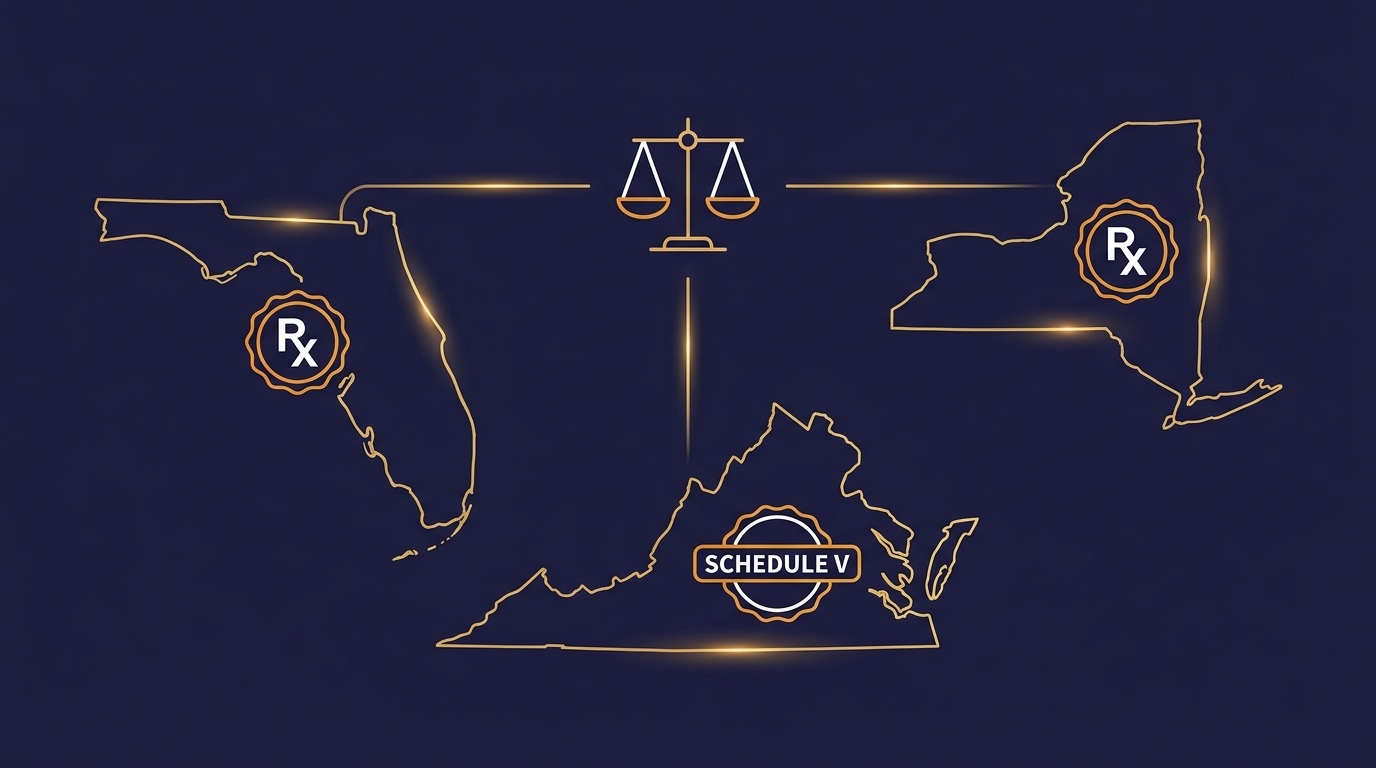
If you are a pet parent wondering whether gabapentin is a controlled substance, you are not alone. Gabapentin is not a federally scheduled controlled substance under the DEA, but state laws vary significantly. In Virginia, it has been classified as a Schedule V controlled substance since 2019, while Florida and New York treat it as a standard prescription-only medication. Understanding these distinctions is vital because state classification impacts pharmacy ID requirements, refill limitations, and prescription monitoring program logging.
As a 501(c)(3) non-profit, RexVet helps clarify these regulations for pet owners. We have served over 50,000 pet parents with a 4.9-star rating across 8,300 reviews, providing accessible telehealth consultations for $64.99. Whether your pet needs help with neuropathic pain, seizure management, or anxiety, our licensed veterinarians can evaluate your pet through a valid VCPR. One honest caveat up front: because gabapentin is a human drug used extra-label in pets, federal rules require an in-person exam before any veterinarian can prescribe it, so a telehealth-only visit cannot end in a gabapentin prescription. We explain exactly what an online vet can and cannot do below. Always verify current state statutes, and book a RexVet visit to discuss your pet's specific needs with a professional.
Federal Status vs State Regulations
When asking whether gabapentin is a controlled substance, the answer depends on your location. While the DEA does not classify it as a controlled substance, individual states have the authority to impose stricter regulations. In Virginia, it is a Schedule V substance, which requires pharmacies to log every transaction into the state's Prescription Monitoring Program (PDMP). Conversely, Florida and New York treat it as a standard prescription medication, though it remains strictly regulated as an extra-label drug for pets.
Understanding whether gabapentin is a controlled substance helps you prepare for pharmacy interactions. Because of its potential for misuse, pharmacists may request valid identification and enforce strict refill limits. At RexVet, our 501(c)(3) non-profit team provides professional telehealth guidance to help you navigate these rules. We have supported over 50,000 pet parents with 4.9-star care. Book a $64.99 video visit to discuss if this medication is the right choice for your pet's comfort.
Gabapentin Rules for Florida, New York, and Virginia
When you ask whether gabapentin is a controlled substance, you are highlighting a common confusion. While federal law does not schedule it, state-level mandates dictate how your veterinarian manages your pet's care. In Virginia, the Schedule V status requires strict logging into the state's PDMP.
Understanding whether gabapentin is a controlled substance is essential for pharmacy interactions. Because of its pharmacovigilance profile, some pharmacists apply human-grade scrutiny to pet scripts. As a 501(c)(3) non-profit, RexVet prioritizes safety and compliance. Our licensed vets can use secure telehealth to discuss whether this medication fits your pet's needs. With over 50,000 pet parents served and a 4.9-star rating, we provide transparent, affordable care at $64.99 per visit. Book a consultation today to discuss your options safely.
Why Pharmacies Treat Gabapentin Differently
When you ask whether gabapentin is a controlled substance, you are touching on how pharmacists ensure safety. Because this drug is often used for human nerve pain, pharmacies apply extra scrutiny to pet prescriptions to prevent diversion. This is why you may be asked for a photo ID, even for your cat or dog. Pharmacists are checking that the prescription is legitimate and tracking it through state databases to ensure compliance with local laws.
In states like Virginia, where the drug is a Schedule V substance, these checks are mandatory by law. In Florida and New York, while not state-scheduled, pharmacists still exercise professional judgment. If you are still wondering whether gabapentin is a controlled substance, remember that RexVet is here to help. Our 501(c)(3) non-profit platform connects you with licensed vets who can explain these requirements during a $64.99 video visit, ensuring you feel confident picking up your pet's medication.
Common Uses for Gabapentin in Pets
When exploring whether gabapentin is a controlled substance, it is vital to understand its clinical role. Veterinarians frequently prescribe this medication for chronic neuropathic pain, as an adjunct for seizure control, and to manage situational anxiety or provide sedation before stressful events like vet visits. While it is a human drug used extra-label in pets, its efficacy in these areas makes it a cornerstone of modern veterinary care.
Because regulatory environments shift, pet owners often wonder whether gabapentin is a controlled substance. While not federally scheduled, Virginia classifies it as a Schedule V substance, whereas Florida and New York do not. This distinction influences how pharmacies handle your request, often requiring additional identity verification and logging. At RexVet, our licensed veterinarians provide expert guidance through $64.99 video visits, helping you navigate these state-specific requirements safely and efficiently for your pet's comfort.
Extra-Label Use and Veterinary Safety
When navigating your pet's health, you might ask whether gabapentin is a controlled substance. While the federal government does not schedule it, state-level regulations create a patchwork of requirements. In Virginia, the state classifies it as a Schedule V substance, necessitating strict logging in the Prescription Monitoring Program. Conversely, Florida and New York treat it as a standard prescription medication, though it remains strictly regulated as an extra-label drug for pets.
Understanding whether gabapentin is a controlled substance helps you avoid pharmacy delays. Pharmacists often enforce ID checks and refill limits to ensure compliance with local statutes. As a 501(c)(3) non-profit, RexVet provides accessible, $64.99 video consultations to help you navigate these rules. Our licensed veterinarians, who have served over 50,000 pet parents with a 4.9-star rating, can discuss whether this medication is appropriate for your pet's needs. Book a visit today to discuss your options with a professional.
Can an Online Vet Prescribe Gabapentin? The Honest Answer
Here is the part most articles skip. Gabapentin is a human medication that veterinarians prescribe to pets extra-label. Under federal law (AMDUCA and the FDA's rules in 21 CFR 530), extra-label prescribing requires a veterinarian-client-patient relationship in which the vet has examined your pet in person or made a timely visit to where the animal lives. The FDA has confirmed that this federal VCPR cannot be created through telemedicine alone, although it can be maintained by video between hands-on visits. In practice, a vet who has only ever seen your dog or cat on a screen cannot write a gabapentin prescription.
Florida makes this explicit. Since July 1, 2024, Florida Statute 474.2021 lets a Florida-licensed vet establish a VCPR by live video, but it bars telehealth-only vets from prescribing controlled substances or drugs approved for human use unless the vet has examined the animal in person (or made timely visits to where it lives within the past year), and, as of 2026, it caps telehealth-only prescriptions for approved animal drugs at 14 days with no renewal without an in-person exam. In Virginia, gabapentin's Schedule V status brings PMP reporting, a six-month expiry and a five-refill cap. Gabapentin is a human-labeled drug, and a controlled substance in Virginia, so a veterinarian needs to examine your pet in person before prescribing it. New York has no telehealth-specific veterinary statute; its practice guidelines expect timely in-person visits.
So what is a $64.99 RexVet visit actually good for here? Quite a lot: talking through whether gabapentin (or an alternative) makes sense for your pet's pain, seizures or anxiety before you spend on an in-person workup; reviewing sedation, a wobbly gait or other side effects after your regular vet started it; explaining how the pharmacy will handle the script in your state; and, when the situation calls for it, prescribing an FDA-approved animal drug that fits your state's telehealth rules. Nothing is guaranteed, and our vets will tell you plainly when an in-person exam is required. That honesty is the point. See our guide to what online vets can and cannot prescribe for the bigger picture.
Navigating Controlled Substance Restrictions Online
When you ask whether gabapentin is a controlled substance, you are highlighting the complex regulatory landscape of modern veterinary medicine. While the DEA does not classify gabapentin as a controlled substance, Virginia has independently designated it as a Schedule V drug, requiring strict adherence to state tracking systems. In contrast, Florida and New York maintain it as a standard prescription medication.
Understanding whether gabapentin is a controlled substance is essential for avoiding pharmacy friction. Because of its human use, pharmacists often apply rigorous identity verification and refill oversight to ensure compliance. At RexVet, our non-profit platform has supported over 50,000 pet parents with a 4.9-star rating. Our licensed veterinarians facilitate safe, legal care through a valid VCPR, helping you navigate these nuances. Whether you need guidance on managing chronic pain or anxiety, book a $64.99 video visit today to discuss your pet's specific health needs with a professional.
RexVet Approach to Affordable Pet Care
At RexVet, we believe affordable care starts with transparency. As a 501(c)(3) non-profit, our mission is to provide accessible veterinary guidance through video visits for just $64.99. When you search whether gabapentin is a controlled substance, you are looking for clarity in a complex regulatory landscape. Our licensed veterinarians help demystify these rules, ensuring you understand how state-specific classifications affect your access to medication.
We have successfully supported over 50,000 pet parents, maintaining a 4.9-star rating across 8,300 reviews by focusing on clinical integrity. While federal guidelines are clear, state-level nuances can be confusing. When you ask whether gabapentin is a controlled substance, remember that our virtual platform is designed to help you navigate these requirements safely. Whether your pet needs support for chronic pain or anxiety, book a video visit today to discuss your options with a professional who prioritizes your pet's health over profit.
When to Seek In-Person Veterinary Care
Knowing when to skip a virtual consultation and head to an in-person clinic is a critical skill for any pet parent. While RexVet provides expert support for many concerns, some situations require a physical examination, diagnostic imaging, or immediate intervention that cannot be performed remotely. If your pet shows signs of acute respiratory distress, severe lethargy, uncontrolled bleeding, or sudden collapse, please seek emergency care immediately. These symptoms often indicate life-threatening conditions that demand hands-on veterinary attention.
When researching whether gabapentin is a controlled substance, remember that while we can help manage chronic pain or anxiety, an in-person exam is necessary if your pet requires a physical neurological assessment or blood work to monitor organ function. We prioritize your pet's safety above all else. If you are ever unsure about the severity of your pet's symptoms, our team can help triage the situation. Understanding whether gabapentin is a controlled substance is part of being a prepared owner, but never delay urgent care when physical signs suggest a medical emergency.
Booking Your Virtual Consultation Today
Taking the next step for your pet's comfort is simple. If you are still asking whether gabapentin is a controlled substance, our team is ready to provide clarity. Booking a virtual consultation allows you to speak directly with a licensed veterinarian who can assess your pet's specific needs for pain or anxiety management.
As a 501(c)(3) non-profit, RexVet offers professional guidance for a flat fee of $64.99 with no hidden subscription costs. We have successfully supported over 50,000 pet parents and maintain a 4.9-star rating across more than 8,300 reviews. When you wonder whether gabapentin is a controlled substance, remember that our vets prioritize safety and regulatory compliance above all else. Visit our website to schedule your session, discuss your options, and receive a prescription sent to your preferred pharmacy when clinically appropriate.
Frequently Asked Questions
Is gabapentin a controlled substance in Florida, New York, or Virginia?
The answer depends on your state. Gabapentin is not a federally controlled substance under DEA rules. However, Virginia classifies it as a Schedule V controlled substance under state law as of 2019. In Florida and New York, it is not currently state-scheduled, though it remains a prescription-only medication. Because laws can change, always check with your local veterinarian or pharmacist to understand how state rules impact your pet's specific prescription.
Can I fill my dog's gabapentin prescription at a human pharmacy?
Yes, in most cases, you can fill a veterinary prescription for gabapentin at a human pharmacy. Because gabapentin is a human drug used extra-label for pets, pharmacies are often familiar with the medication. However, if your state classifies it as a controlled substance, the pharmacy may require specific identification or have stricter refill protocols. Always ensure your veterinarian provides a valid prescription that clearly states the pet's name and the correct dosage instructions.
Why does the pharmacy ask for my ID when picking up my pet's gabapentin?
If your state has classified gabapentin as a Schedule V controlled substance or requires it to be logged in a Prescription Monitoring Program (PDMP), pharmacies are legally required to verify the identity of the person picking up the medication. This is a standard safety measure to track the distribution of medications that have potential for misuse. Even if it is not a controlled substance in your state, some pharmacy chains have internal policies requiring ID for any prescription pick-up to ensure accuracy and security.
Can an online vet prescribe gabapentin for my pet?
Not from a telehealth-only relationship. Gabapentin is a human drug used extra-label in pets, and federal rules require an in-person exam (or premises visit) before extra-label prescribing. Florida law also expressly bars telehealth-only vets from prescribing human-labeled or controlled drugs without an in-person exam, and Virginia adds Schedule V limits. An online vet can still evaluate your pet, discuss whether gabapentin is even the right option, review side effects, and prescribe FDA-approved animal drugs where state rules allow. If your regular vet has already examined your pet, telemedicine can help maintain that relationship. Every case is decided by the veterinarian and nothing is guaranteed.
What is gabapentin typically used for in dogs and cats?
Veterinarians frequently prescribe gabapentin to manage several conditions in pets, including chronic or neuropathic pain and as an adjunct treatment for seizures. It is also commonly used for situational anxiety and as a mild sedative to help keep cats and dogs calm during stressful events, such as a visit to the veterinary clinic. Because it is a human medication, it must always be used under the direct guidance of a licensed veterinarian to ensure safety and proper dosing.
How does RexVet help if I have concerns about my pet's pain or anxiety?
RexVet is a 501(c)(3) non-profit platform that offers affordable, virtual consultations with licensed veterinarians. If you are concerned about your pet's pain or anxiety, you can book a video visit for a flat fee of $64.99. Our vets will assess your pet's symptoms, discuss potential treatment options, and, if clinically appropriate, send a prescription to the pharmacy of your choice. We provide professional, compassionate guidance to help you navigate your pet's health needs without the stress of an unnecessary in-person clinic visit.
Related reading: Comparing pain options? carprofen (Rimadyl) for dogs, an FDA-approved animal drug telehealth vets can often prescribe. Full gabapentin uses guide: gabapentin for dogs: what it treats and typical uses.
FAQs
Is gabapentin a controlled substance in Florida, New York, or Virginia?
The answer depends on your state. Gabapentin is not a federally controlled substance under DEA rules. However, Virginia classifies it as a Schedule V controlled substance under state law as of 2019. In Florida and New York, it is not currently state-scheduled, though it remains a prescription-only medication. Because laws can change, always check with your local veterinarian or pharmacist to understand how state rules impact your pet's specific prescription.
Can I fill my dog's gabapentin prescription at a human pharmacy?
Yes, in most cases, you can fill a veterinary prescription for gabapentin at a human pharmacy. Because gabapentin is a human drug used extra-label for pets, pharmacies are often familiar with the medication. However, if your state classifies it as a controlled substance, the pharmacy may require specific identification or have stricter refill protocols. Always ensure your veterinarian provides a valid prescription that clearly states the pet's name and the correct dosage instructions.
Why does the pharmacy ask for my ID when picking up my pet's gabapentin?
If your state has classified gabapentin as a Schedule V controlled substance or requires it to be logged in a Prescription Monitoring Program (PDMP), pharmacies are legally required to verify the identity of the person picking up the medication. This is a standard safety measure to track the distribution of medications that have potential for misuse. Even if it is not a controlled substance in your state, some pharmacy chains have internal policies requiring ID for any prescription pick-up to ensure accuracy and security.
Can an online vet prescribe gabapentin for my pet?
Not from a telehealth-only relationship. Gabapentin is a human drug used extra-label in pets, and federal rules require an in-person exam (or premises visit) before extra-label prescribing. Florida law also expressly bars telehealth-only vets from prescribing human-labeled or controlled drugs without an in-person exam, and Virginia adds Schedule V limits. An online vet can still evaluate your pet, discuss whether gabapentin is even the right option, review side effects, and prescribe FDA-approved animal drugs where state rules allow. If your regular vet has already examined your pet, telemedicine can help maintain that relationship. Every case is decided by the veterinarian and nothing is guaranteed.
What is gabapentin typically used for in dogs and cats?
Veterinarians frequently prescribe gabapentin to manage several conditions in pets, including chronic or neuropathic pain and as an adjunct treatment for seizures. It is also commonly used for situational anxiety and as a mild sedative to help keep cats and dogs calm during stressful events, such as a visit to the veterinary clinic. Because it is a human medication, it must always be used under the direct guidance of a licensed veterinarian to ensure safety and proper dosing.
How does RexVet help if I have concerns about my pet's pain or anxiety?
RexVet is a 501(c)(3) non-profit platform that offers affordable, 24/7 virtual consultations with licensed veterinarians. If you are concerned about your pet's pain or anxiety, you can book a video visit for a flat fee of $64.99. Our vets will assess your pet's symptoms, discuss potential treatment options, and, if clinically appropriate, send a prescription to the pharmacy of your choice. We provide professional, compassionate guidance to help you navigate your pet's health needs without the stress of an unnecessary in-person clinic visit.
Medically Reviewed
Reviewed by Dr. Tiffany Delacruz, DVM — licensed veterinarian and CEO of RexVet. Last reviewed August 15, 2026.
Content is for informational purposes and does not replace professional veterinary advice.
Chief Executive Officer · Licensed Veterinarian
Dr. Delacruz is a licensed Doctor of Veterinary Medicine specializing in preventive care and veterinary telehealth. She reviews all health content on RexVet to ensure accuracy and clinical relevance.
Sources & References
- · American Veterinary Medical Association — Telehealth Guidelines
- · AVMA — Pet Care Resources
- · U.S. FDA — Animal & Veterinary
Need an Expert Opinion on This Topic?
Connect with a certified vet via video call in minutes
Talk to Vet Now